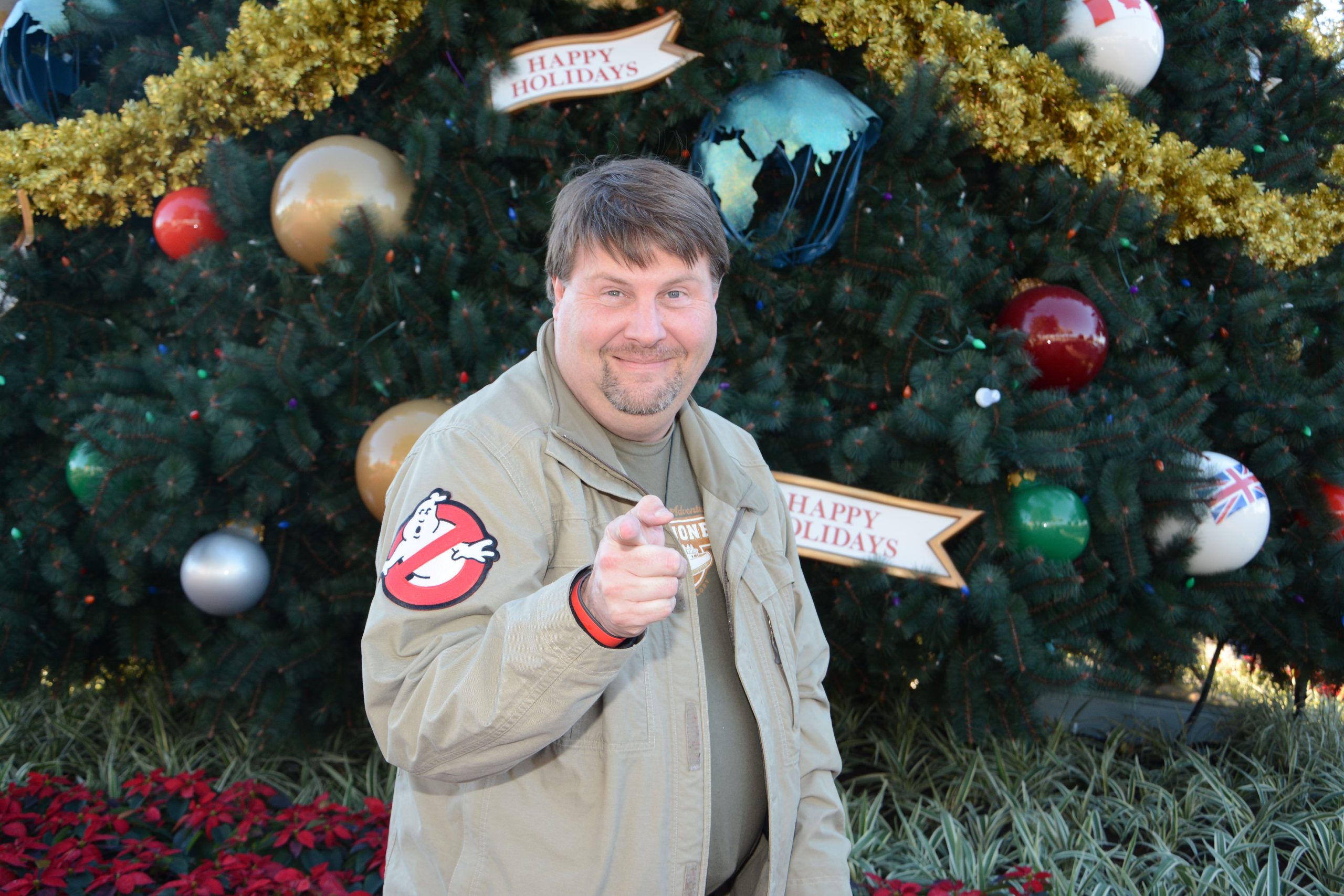
KyL Truman Cobb, Jr. is an author, historian, demonologist, and paranormal investigator living in Florence, South Carolina. His notable works include:
• Ghosts and Demons: The Lost Things
• Ghosts and Demons: Forgotten Lore
• Griffin, Georgia: We Could Have Been Famous… history series
• The History and Hauntings of the Thomas House Hotel
Leaving an indelible mark on the landscape of tomorrow.
The revitalized art gallery is set to redefine cultural landscape.
To paraphrase Forest Gump, “I ain’t lived no humdrum life…”
Cobb is born in Griffin, Georgia as the son of Kyle Truman Cobb and Marian Tarpley. His father rises from being a sharecropper in Brooks, Georgia to owning a number of businesses throughout Georgia. In 1978, Cobb’s father is elected to the Georgia State Senate. Cobb’s mother, a Griffin native, is an artist and a homemaker. Cobb grows up in rural western Spalding County, along the Fayette County line, where his nearest neighbour is almost half a mile away. He graduates from Griffin High School in 1986.
Cobb attends Gordon Junior College in Barnesville, Georgia while in junior high school and high school. He takes college level computer programming courses while still in eighth grade. Cobb also attends the Georgia Institute of Technology and Kennesaw State University, receiving a bachelor’s in international affairs in 1993. While at Kennesaw State, Cobb is a writer, an editor, and the Editor-in-Chief of the university newspaper, the Sentinel.
Cobb begins working at the age of twelve in a Griffin supermarket, where he remains until moving to Atlanta for college. In 1986, he miraculously lands a job with the Cable News Network. In 1988, he joins Southern Satellites in promoting Superstation TBS around the United States. In 1994, Cobb develops the Insite environmental analysis program for Law Engineering and for the United States Air Forces in Europe. The program allows for on-demand analysis of soil chemical elements to determine contamination and plot the sample geographically.
The adventures
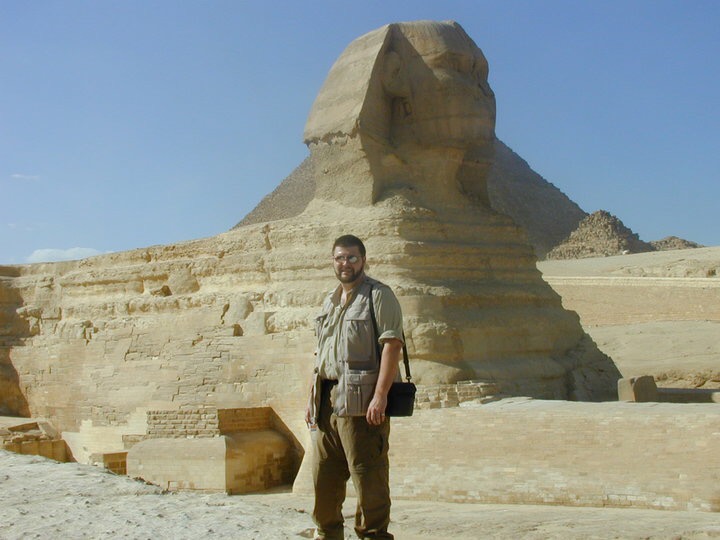
Cobb begins traveling the world in 1988 with a trip throughout eastern and western Europe with a retired Ambassador. Subsequently, employment projects return him frequently to Europe. Over the next decade, Cobb travels solo from Japan to Egypt to Peru. Covering over sixty countries in his explorations, Cobb focuses on the evolution of religion from the pre-Christian period until modern incarnations.
As a photographer, Cobb captures over 15,000 photos of a changing world and won acclaim for photography on his website www. sirkyl.com.
Parallel to his travels, Cobb is a part of the Organic X radio show at 99X in Atlanta from 1995 until 2011. As part of the show, Cobb is one of the three founders of the Unplugged in the Park concert series that ran in Atlanta, GA for twelve years. The show and the concert series help establish many young performers including Sonia Leigh, Delta Rae, Rachel Platten, and The Civil Wars.
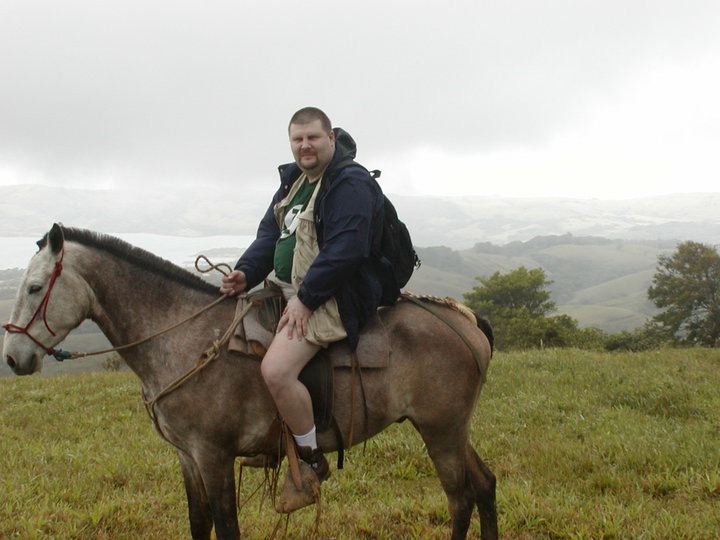
The ramblings
Cobb’s first commercial book is Ghosts and Demons: The Lost Things in September 2015. This work is designed as a textbook for paranormal investigators. In addition to discussing the scientific theories behind paranormal research, Cobb also extensively presents the historical and literary development of the concepts of paranormal. The book also features case studies on famous demonic cases such as Anneliese Michel and The Exorcist movie.
Also, in 2015, Cobb publishes Griffin, Georgia: We Could Have Been Famous, Volume 1- Glory. This extensive, three-hundred-page history book chronicles the growth of Griffin, Georgia and Spalding County, Georgia from pre-history until 1889. One major focus of the book is the contribution of Griffin, Georgia to the growth of Georgia as a whole and its part in the War of Northern Aggression.
In January 2016, Cobb publishes Griffin, Georgia: We Could Have Been Famous, Volume 2- Heroes. This four-hundred-page history book examines the evolution of Griffin from a post war ruined experiment into one of the United States leading textile mill towns. This work covers 1890 until 1949. One of the features of this work is a focus on previously forgotten American heroes and their contribution to creating a better society.
In March 2016, Cobb releases his fourth commercial book, Ghosts and Demons: The Truth of the Bell Witch. This short work takes a critical look at the Bell Witch legends as presented in historical documents. Unravelling two hundred years of lies, distortions, and profiteering, Cobb disproves many of the legend’s fundamental assertions.
In July 2016, Cobb releases his fifth book and third local history book, Griffin, Georgia: We Could Have Been Famous, Volume 3- Shadows. With over four hundred fifty pages, this book explores Spalding County, Georgia from the 1950s until the book’s creation. In many ways this book is a look at how a small town survives once the party is over.
Parallel to Griffin, Georgia: We Could Have Been Famous, Volume 3- Shadows, Cobb also released a biographic dictionary to accompany his history books as a sixth book called Griffin, Georgia: Kudzu Garden.
September 2016 brings Cobb’s seventh wide-distribution book and his third paranormal book, Ghosts and Demons: Disturbed Destinations. While sold as a paranormal book, this work is really an excuse to unravel the real history of twenty-six allegedly haunted locations.
In March 2019, Cobb releases an updated version of the Truth of the Bell Witch as a special edition including an earlier version of the Thomas House History.
December 2020 sees the release of The History and the Hauntings of the Thomas House Hotel with co-author Chad Morin.
Just in time for the 2020 end of the world from COVID-19, Cobb releases Ghosts and Demons: Forgotten Lore that produced a historical “deep-dive” into the history of many named biblical demons.
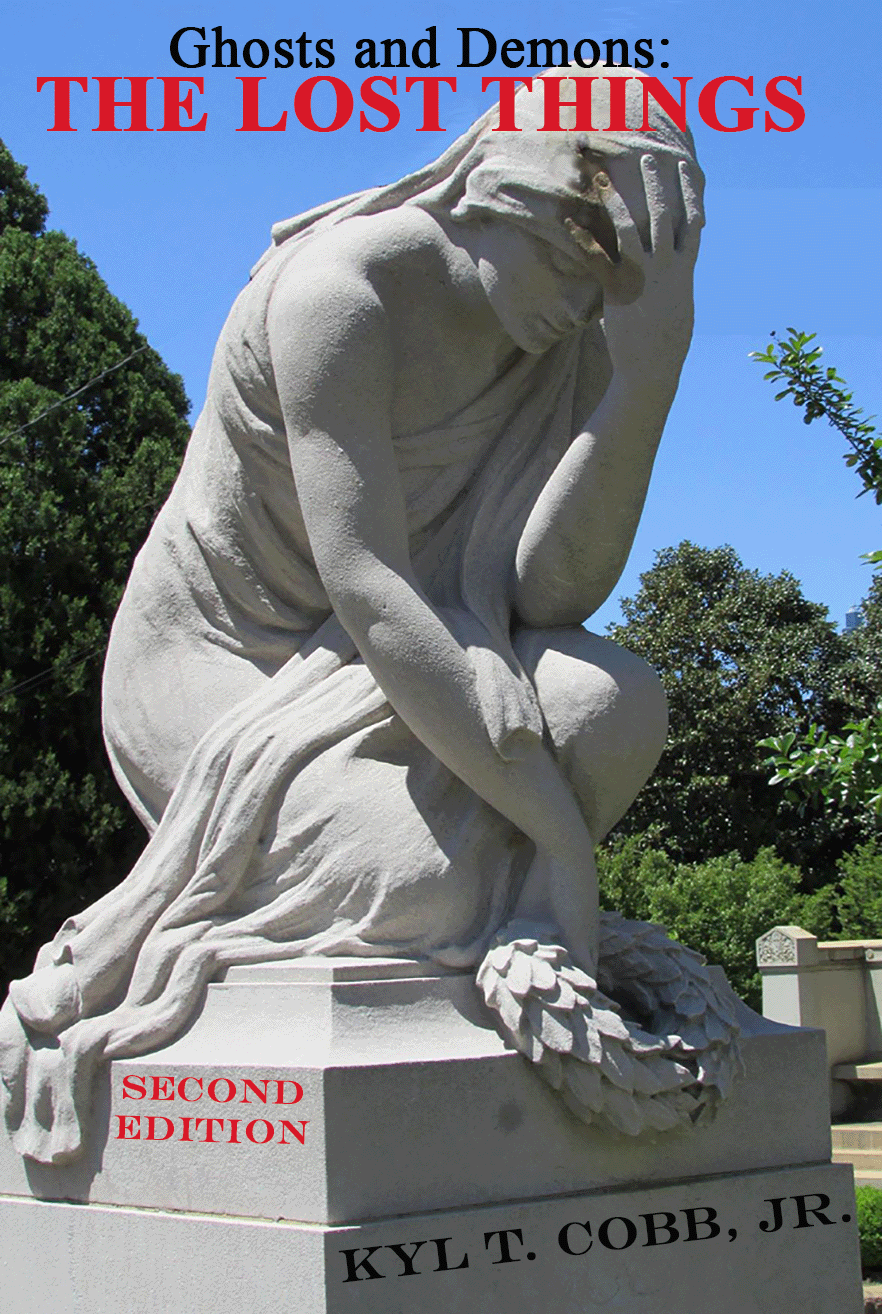
The Lost Things (second Edition)
A textbook for the paranormal
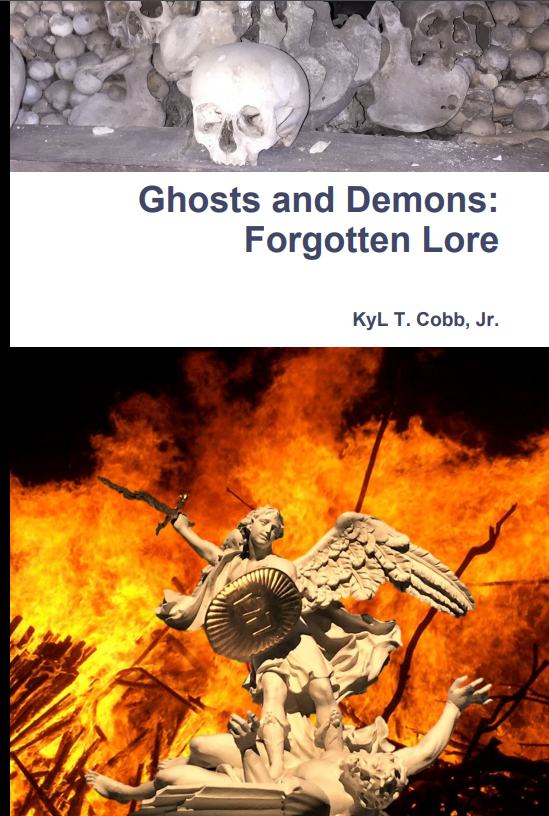
Forgotten Lore
An exploration of Daimons
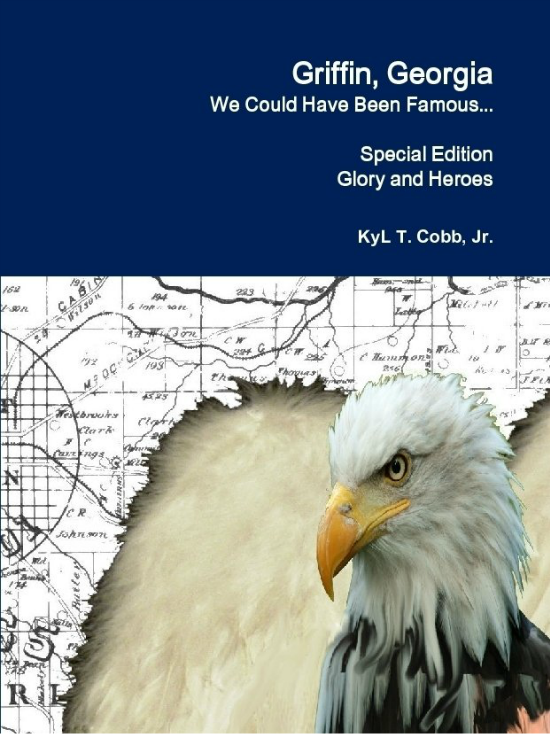
Griffin, Georgia: We Could Have Been Famous…
A four-volume set on the History of Griffin, Georgia
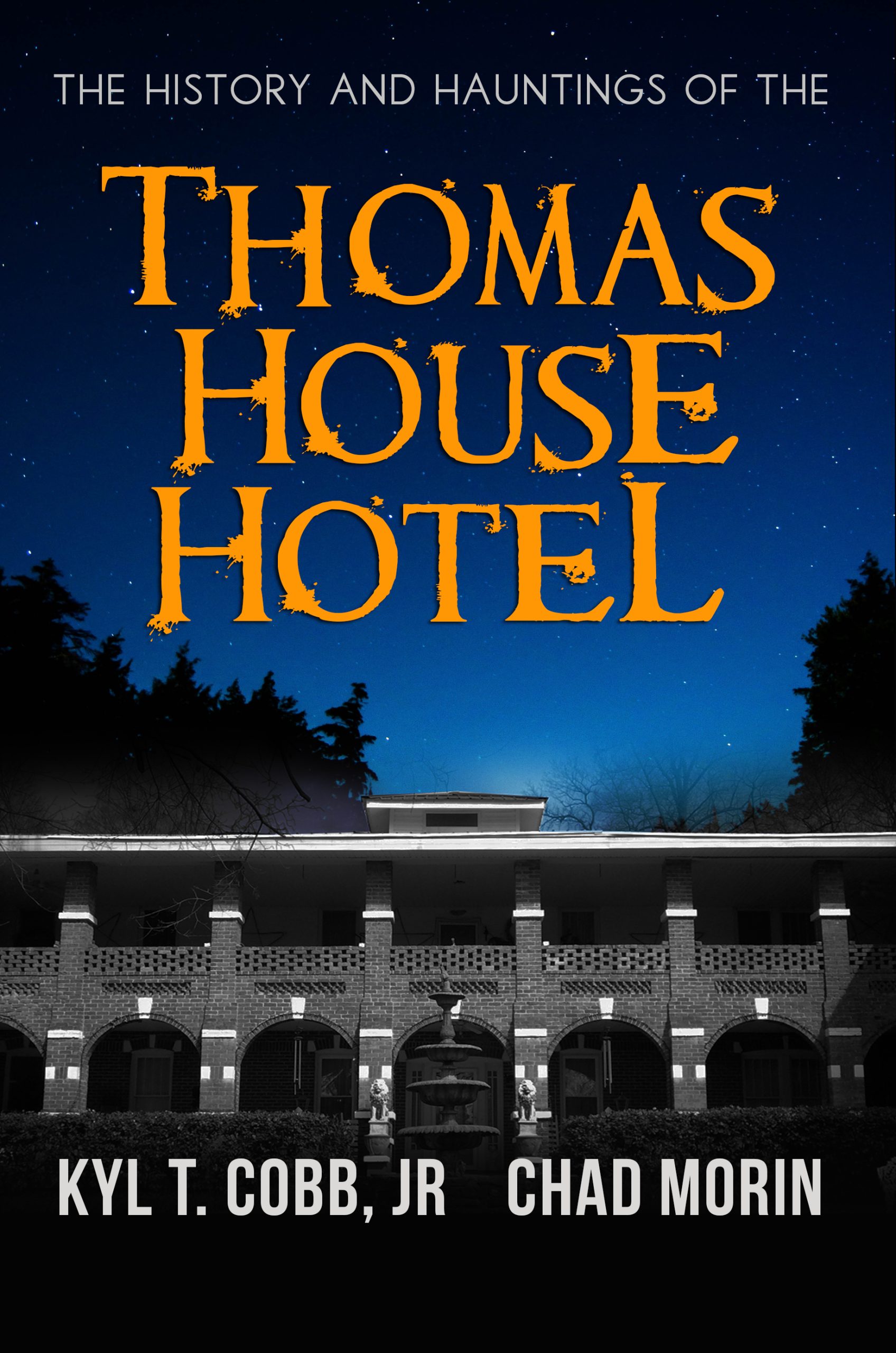
The History and Hauntings of the Thomas House Hotel
The history and paranormal experiences of America’s most haunted location.
FAQs
What prompted you to write The Love God?
The story of Oakley Crawford is one that needed to be told. While this amazing person did so many horrible things to people around the world, he also inspired unequalled levels of blind belief and devotion. This amazing man proved to be ideal politician with his eloquent speech and his extraordinary ability to lie. Not only was he on a presidential campaign, but he was run as in a congressional race and consider as a nominee for the United States Senate.
His ability to re-invent himself is astounding. Each adventure is more inspiring than the next.
I was fortunate to discover his stenographically captured speeches that preserved 118 sermons. After reading the first sermon that I found, I knew that they were important enough to reconstruct and preserve. These became The Love God Speaks. Not only do these extemporaneous speeches showcase Worthington’s near photographic memory, but they also provide keen insights into his thought process as well as his character.
How long did it take you to research The Love God?
Each book that I write has its own life. The Love God series took the most dedicated time. The original research on The Love God began as a part of my Griffin, Georgia history series with a single reference in an 1886 Columbus, Georgia newspaper mentioned that a con man had married a Griffin girl and absconded with her family’s money. For the ten pages in that book, I dedicated about six months. Over the subsequent years, I kept pondering the exploits of Oakley Crawford and Arthur Bentley Worthington. Following the completion of Forgotten Lore in 2019, I planned on writing a sequel to that book. Oakley Crawford had a better idea. The three book The Love God series took an addition 3.5 years to research and transcribe.
Will there be more Love God projects?
Spoilers.
Are you really a Demonologist?
Yes. Since age 13, I have been studying ancient religions and the evolution of those religions into the modern belief systems. Most religions have some form of divinity that they believe interact with the physical world. As a historian, I research the various aspects and origin of these entities. In the field, I most often disprove that an alleged victim is experience a demonic attack. Currently, I most often refer to myself as a daimonologist to suggest a studying not limited by Christian interpretation of entities.