Sermon 023- Gratitude
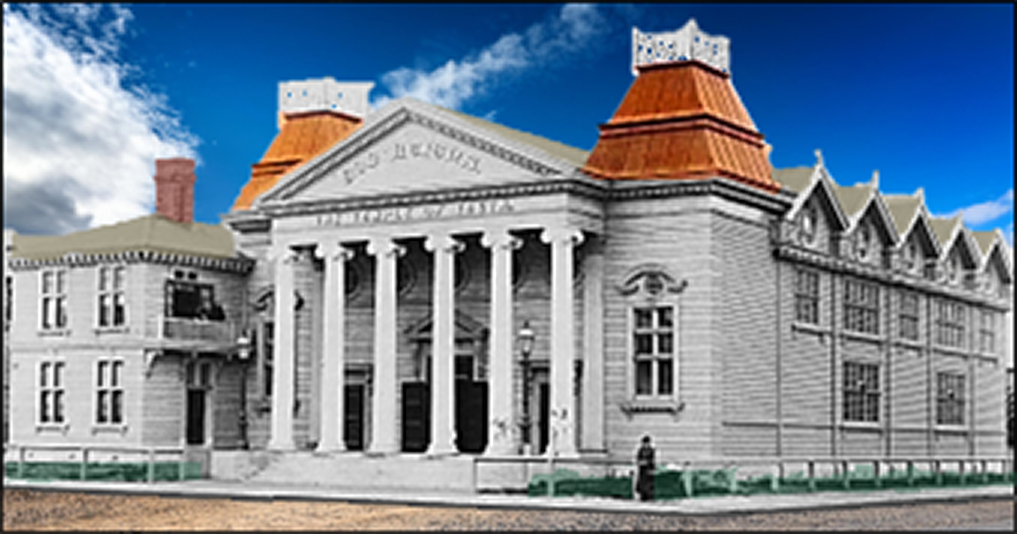
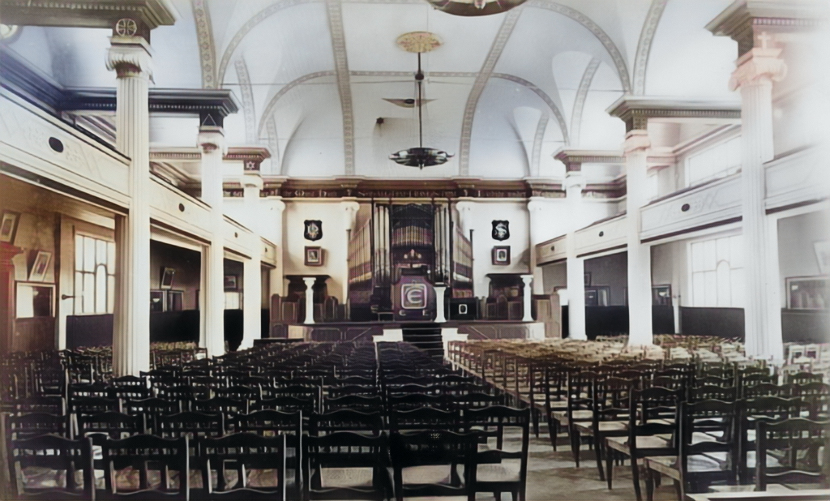
Stenographic Report of Mr. Worthington’s Bible Talk at the Temple of Truth
Sunday, May 7th, 1893.
I. Thessalonians V. 18.
“In everything give thanks.”
The life of man is wondrously large, when we consider his activities, his responsibilities, his capacities, when we think of his emotions, his duties, his states, and his conditions, that go to make up the myriad bewildering details before which the mind stops, unable to grasp its minutiae. Because of this, we are largely acting in unconsciousness of the particular detail or act in which we are engaged; there is so much of that detail welling up from the within, beating against us from the without, that it is impossible for the conscious mind to pursue all of its ramifications. Hence it is that in very much that we do, we act automatically. The work-man engaged at his day’s task, does not stop to count and consider each particular act that makes up the great unit of his day’s work. The sculptor or the architect would accomplish nothing in the great task to which he has assigned himself, if compelled to stop and work out each detail of every thought and act before he performed it. The logician does not, for a moment, think of differentiating in his mind all the detail of the law of synthetic thought as he proceeds; the speaker, or the singer, is not compelled to stop and formulate his single note before uttering it. The business man does not stop to consider the multiplication table in making up his accounts. These are conditions precedent that had to be learned before the great volume of duty can be entered upon.
And so it is that we say that the detail of life is so diverse, so bewildering, so enormous in the individual, so stupendous and impossible of conception in the aggregate universe, that life must be classed in groupings, in generalisations. We find that it is so in the very order of our surrounding. We find that in the physical world about us, there are the divisions of the three kingdoms, the mineral, the vegetable, and the animal kingdoms. In all our surroundings there are great groupings, within which the order of that particular class pursues its process, and presents its result, in the perfect rhythm of a perfect and uniform law. We find that the great machinery of government is divided into the executive, the legislative, and the judicial departments; there are departments of the military, of the postal service, of the interior, of agriculture, in order that the enormous detail represented by the whole may be intelligently administered through these different departments.
This law is precisely the same in morals and religion. Until the mind has reduced itself to a condition of order, a condition of reason, a condition of right, a condition of love, the inner kingdom of the mind is of necessity in confusion, it is under varying laws, under conflicting influences which produce discordant results. Hence it was that the greatest teacher that ever lived grouped into one unit the law of life and religion, in an epigram in which he said that the heart-centre of religion was love to God and to your neighbour. Hence, for the same reason, Paul, in the matchless statement that he has left upon record, constantly grouped the great duties of life and habit, the great duties of mind and soul, under statements general in their character. So that, when he was writing to these churches, he began with certain habits of life; he told them that it was necessary, first, to esteem their teachers, because of the work in which they were engaged; next, that it was necessary to maintain peace among themselves, to admonish the thoughtless and sinful, to sustain the weak and comfort the suffering, to maintain that standard of action which returned good for evil at all times; these were the habits that were to be carried into the lives of the men and women composing those earlier churches.
Next, there was an attitude of soul and mind to be maintained in order that the largest spiritual results might follow, hence he says, “Rejoice always,” “Pray without ceasing,” “In everything give thanks.” If you have received the light that is of Christ, if you are maintaining the standards of truth and righteousness in your soul, let it be a cause of rejoicing; do not go about the world cast down, discontented, but rejoice always in the largeness, the magnitude, the grandeur, the dignity, the sublimity, and the power of that which has been revealed to you in Christ. And then “pray without ceasing;” let there be a constant and continuous communion between you and the great laws by which you are surrounded; pray without ceasing, so that you may become a generator of order, of salvation, of righteousness; pray without ceasing, so that you may be a creator of conditions of harmony, of love, of peace, and goodwill in the earth.
And then, lastly, we come to the statement which forms the basis of our present thought, “In everything give thanks.” Strange statement, in everything. It is a statement that at once closes the mouth of cavilling complaint, a statement that at once moves out into the wider horizons of thought, and commands that you follow it into that larger apprehension of God that knows all is good, and is willing to trust that good in every condition and phase of human experience.
Now there are some people who say, why should I give thanks, and to whom? If, as you say, there is no personal God, does not the sustained order of the universe pursue its lawful course, does not the sunshine fall upon the evil and the good, and the rain descend upon the just and the unjust, whether I give thanks or not? Do not the seasons return in their ordinary cycle, despite my attitude of mind? Do I not have to labour for all that I receive; am I not deprived of much that I want; why should I give thanks when I am broken upon the wheel of this mysterious fate that seems to crush me in the mill of its stupendous forces, and destroy the wishes, the hopes, the desires, the aspirations, of the human family? I cannot change the hairs on my head, nor alter the fabric of a blade of grass, nor stop the course of a star, why should I give thanks?
Think a moment. As you looked from your casement this morning, the breath of love was wiping the tears from the face of the sky, and its bosom of deep blue was speaking to your soul a message of the coming sunlight, of love and peace, of the clearing process that weeds out the clouds, the rain, the darkness, the tears, and the storm, from human life, as from the material and physical universe. Oh! when the marvellous arrangement of order assailed your senses, as you looked into those air currents that floated around you, as you saw the upward stretching mile upon mile of mysterious depth, as the sun in all its majesty and grandeur walked into the firmament, and kissed the bud and flower into new life, or gilded the dew drop upon the house top, or in the centre of the flower, yes, as you looked into the centre of that flower itself, you felt within yourself the power of an intelligent comprehension of God, you felt stirring within yourself the manhood of your Godhood. It was the orderly arrangement of all-sustaining law that spoke through you and to you, announcing God in this masterful world, a God regulating and controlling every act.
You looked through a vision physical in its character, the symbol of another vision that was the opening of the horizons of eternity. You thought, you heard, you reasoned, you found yourself standing upright above the earth, crowned with the majesty of the power to think. You found, in all the realm wherein your thought might traverse, no rival power, no usurper that might question your sonship or your dominion. Face to face with the most colossal temptation that comes to man, you stand with the question as to the why and wherefore of gratitude. There is not a man or woman but has at some time or other, or will at some future time, be confronted by this stupendous temptation; not a temptation to seek for power or wealth, not a temptation of worldly ambition, but a temptation that questions whether all is the good, whether the great plan that is working through the centuries of toil and suffering is at its centre good, whether the good is triumphant over evil and wrong, whether righteousness is the positive, eternal, absolute, or whether sin, discord, and disease are the real, whether the great forces by which we are surrounded, that seem to crush out the life of innocence and ignorance, are true, and right, and just. This is the stupendous temptation which, sooner or later, every man and woman in the world is called upon to face and answer.
How shall we do it? By summoning the witnesses that shall give evidence to establish the true. What are they? They are reason, love, experience, history, fact. These are the witnesses that prove that all is the good, these are the witnesses that establish the fact of the supremacy and the eternity of that good. Is there anything more beautiful in imagination than Beauty? Is there anything anywhere more truthful than Truth? Is there anything anywhere more loving than Love? Is there anything anywhere more living than Life? If not, then these are witnesses that prove that God is the good, these are witnesses that establish the fact of the supremacy and eternity of Love, of Beauty, of Goodness, of Life, of Truth, of Righteousness.
Now the purpose of Paul is to establish in the mind and thought of the churches to which he was writing, this fact; that if once at the centre of the human consciousness there is established the verity of Truth, the automatic action of the life afterwards gives forth the true. Once reason is established at the centre of our consciousness, unreasonableness must go out, and we can give forth nothing but logical truth. Once love is established at the centre of our lives, the act, the thought, the deed breathes love automatically, unconsciously, for the law of our life is established as love. Now, once gratitude is enthroned at the centre of our consciousness, we give out an eternal gladness.
Do you know what gratitude is? We have been in the habit of associating it with personality. It is not true. Gratitude is an intelligent gladness, a comprehensive consciousness of the good, a realisation on our part that we are surrounded by an order, a law, that is eternally unchangeably good. It is a comprehension of the truth of Being, a realisation of the goodness of the good, the loving kindness of love, the truthfulness of truth, the absolute sequence in every realm of physical, moral, and spiritual life. It is a realisation that cause and effect are the inevitable sequence that permeates all moral life, all physical life, and all spiritual life. With that understanding we are grateful that water drowns, we are grateful that fire burns, we are grateful that gravity crushes, we are grateful that the law of sin is death, because we see in all of these the sustained relation of truth, of life, of love. Because one is drowned, we do not therefore wish the lake dried up; because the house is burned down, we are still glad that fire exists, because one falls from a building and is crushed, we are not crushed in consciousness, but we are glad that the law of gravity is sustained, is changeless. Because we find a son, or a daughter, or a friend in the pursuit of sin and suffering, we do not grieve or become unhappy, but we are grateful that the machinery of the great law of God is corrective in its character, and is leading them through the suffering towards the heights of transfiguration and power.
We cannot sorrow that man has to labour in the world, far from it; the clouds, the seas, the earth, the suns, are at work, and so is God. Salvation must come by perspiration, as well as by inspiration. The great law of salvation is proven to me by the law of nature that whispers to me that not one single atom or particle can be lost, but in its most offensive form and character is but preparing to return to us in some other form of beauty and power. Hence it is that we can stand grateful in the presence of all this vast machinery at work all about us, and know that the ignorance with which we are surrounded is being matriculated in the great school of God, and that larger fields of knowledge are constantly opening to man through the discipline of his suffering.
Then we are thankful that God is the Good, that the great plan by which we are surrounded is working out the good in every stage and phase, that the tears and toil of the centuries are bringing their rich fruitage in larger power and beneficence for man. We are grateful that liberty and justice are breaking the barriers of individual might, and permeating the nations of the earth with the religion of the Christ. We are grateful that we are living in this age, in these grand years of doing and becoming; grateful that we, like the Christ, may enter the life of universal humanity; grateful that the eternal gates of God stand wide open always, waiting for the oncoming sea of humanity; grateful that the angel hosts are whispering the message of the Comforter, the Holy Ghost of God, to man; grateful that we see this man upon the throne of his power, handling the keys of the mysteries of Omnipotence; grateful that out of the deluge of crime, and war, and sorrow, and pain, there rises the majestic vision of the New Jerusalem. We are grateful for the promise that God shall wipe away all tears, that there shall be no more death, and that the new heaven and earth are here. We are grateful for the consciousness that clothes every person, circumstance, and thing, with the mantle of the All-Good.
How shall this benediction descend upon each one of us, how shall we feel this gratitude that breathes this godlike benediction? As the dew at midnight breathes larger power into that upon which it descends, so this deep thankfulness will give us larger power into that upon which it descends, so giving, in doing, in being; in giving to the down-trodden, the sick, the sorrowing, the helpless, and the distressed; in doing, in the great harvest field of life those acts that shall prove the faithfulness of our profession, the gratitude within us working in the automatic action of a soul wreathed in an atmosphere of rejoicing always, praying without ceasing, and giving thanks in all things. Thus and thus alone do we receive the consolations of that larger religion that must come to us in the great hours of life, when all else fails. These are the things for which humanity looks to you who profess so much, these are the covenant of God with man that is to be carried to demonstration.
If you go out from this place, and next week go into the circle of your family, your business, or whatever association you may meet, with the spirit of meanness, of coarseness, discontent, of resentment, of condemnation, you have not heard one word that I have said. If, on the other hand, you go to your places this week, giving out the perfume of tenderness, of patience, of love, of goodwill, of peace; if you admonish the thoughtless, if you lift up the suffering, if you return good for evil, if you are at peace in your own soul, and with those by whom you are surrounded, if these are the atmosphere that you give out, you have an apprehension of what it is to give thanks in everything. Oh! give thanks that you have this place to worship in, give thanks for your homes and your children, give thanks for the many channels that open themselves to you for larger usefulness, for that revelation of love in Christ that tells you to watch for the least of the little ones, and do the great mission that he left as his legacy for you to do. Hold fast the true, and with lives that prove the truth of your profession, maintain the standard of the consciousness that is housed in Christ Jesus.